Every March, the world turns green to celebrate a specific version of Irish culture. As a redhead, St. Patrick’s Day is a complicated holiday. It is one of the few times a year where my hair color is “celebrated,” but it is also the time when stereotypes are at their loudest. People see red hair and assume a connection to a specific holiday caricature, but being a redhead is about so much more than a pint of green beer.
My relationship with my hair hasn’t always been one of celebration. I spent 11 years growing up in a strict Catholic school environment where standing out was the last thing you wanted to do. Being a redhead in a sea of uniforms made me an easy target for “soul-stealer” jokes and “hellspawn” nicknames.
I was so caught up in trying to be like everyone else because I was worried about being left out. I even feathered or tinseled my hair to match the other girls and begged my mom to let me dye it a different color. It took a long time to realize that redheads experience the world much differently than the average blonde or dark-haired person. It is a biological reality that influences how I move through the world every single day.

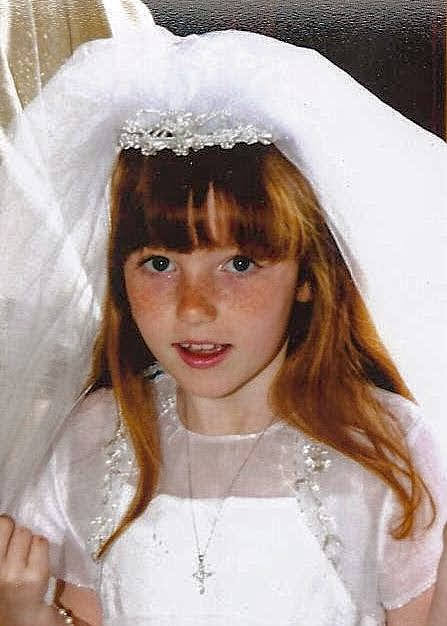
The Genetic Switch: What is the MC1R Protein?
To understand why we are different, you have to look at the chemistry identified by scientists in 2000. Red hair is caused by a mutation in the melanocortin 1 receptor (also known as the MC1R protein). This protein lives on chromosome 16 and acts as a switch for your pigment. Most people produce eumelanin, which creates brown or black hair. In redheads, the MC1R switch is mutated. The body produces pheomelanin instead. This is the pigment that creates red hair, fair skin, and freckles.
Northern European countries have the highest concentrations of redheads. After initial mass emigration from areas near the equator, their skin lightened over time because they were exposed to less sun. In the process, they also lost the ability to naturally convert high levels of vitamin D, so the MC1R gene adapted and helps the body create vitamin D on its own.
This trait is a recessive gene. This means it is a rare “glitch” in the human map. Because MC1R was only discovered nearly 26 years ago (which is about as long as I have been alive) we do not know the exact number of redheads in the world. The best guess is 1% to 2% of the population. For a child to be a redhead, both parents must carry a copy of the mutated gene. More than 40% of the population carries the MC1R mutation, but even if both non redheaded parents carry the gene, there is only a 25% chance of a redheaded baby.
My dad is a blonde, but he sometimes has a little red in his beard, which can be an indicator in men who carry the dormant gene. I’m third generation redhead on my mom’s side. Fun little fact about me is that I’m even more rare in that 1%-2% population because I also have recessive blue eyes. But my mom is even cooler with heterochromia of the two most recessive eye colors, blue and green.

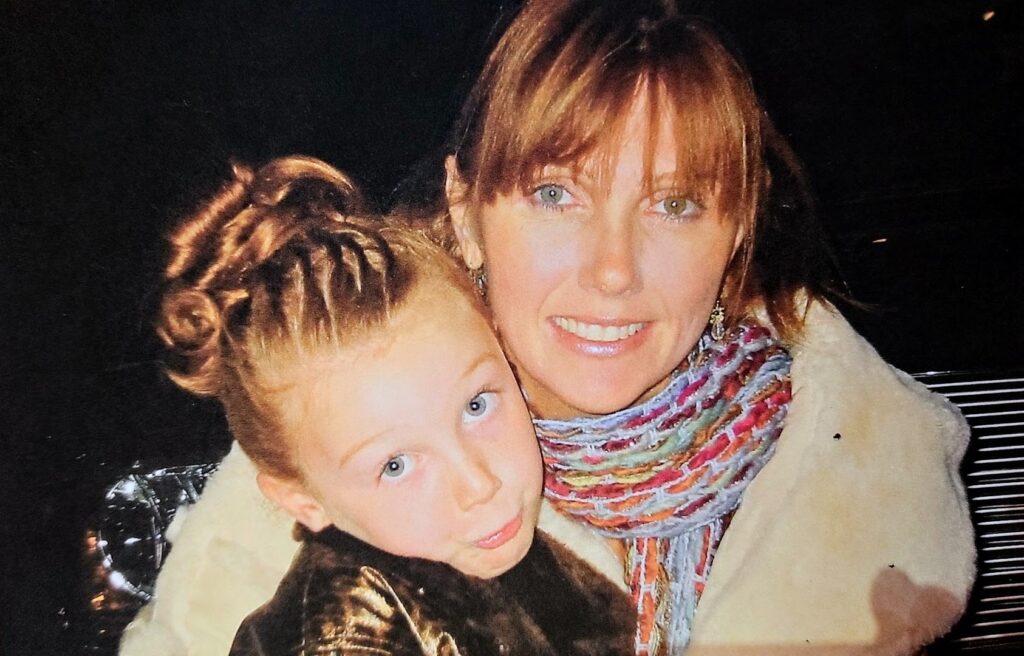
The Invisible Tax: Side Effects and Physical Differences
Because of the way the MC1R gene mutates, it changes the overall makeup of the person. Our signature hair is just one of those changes. We also detect temperature changes more quickly and with greater intensity. If you are standing outside complaining about the cold today, know that I am probably feeling it even worse.
Because we have less need for sunlight, our sensitive skin is at an increased risk for the deadliest form of skin cancer (melanoma). According to Harvard Medical School, the MC1R mutation will not bind itself to the PTEN gene that helps prevent tumors. The PTEN breaks down when exposed to UV rays and pigment-producing cancerous cells can begin to grow. Fear of this dangerous disease was deeply ingrained into my consciousness from a young age. It had me slathering sunscreen on every hour like clockwork to avoid coming home like a lobster.
I am known by the majority of my friends as “the sensitive one.” This is because the MC1R gene also plays a large role in pain reception. Redheads usually have a lower tolerance for pain and need 20 percent more anesthesia than the general population. According to the Journal of the American Dental Association, redheads are twice as likely to avoid the dentist due to pain when not given enough Novocain. I have personally experienced the excruciating pain of waking up in the middle of surgery because the doctors did not believe me when I said I needed a higher dose. It is not a myth. It is a biological requirement for our safety.
The Scripted Redhead: History and Media
It is not just the physical differences that set redheads apart. For centuries, red hair has been considered an indicator of youth and fertility. However, the perception of redheads as deviant and seductive beings has led to our eroticization.
The Seductive Deviation: Eroticization and the Male Gaze
Adam’s first wife Lilith has been portrayed for generations as a promiscuous wanderer after demanding sexual equality with her husband. This ancient archetype persists in modern media where redheaded women are often “drawn” to be the embodiment of desire. Jessica Rabbit is perhaps the most famous example. She is considered a sex icon by many, yet she spends her entire movie battling a reputation she didn’t choose. Her struggle mirrors our own. We are often forced to perform for a society that has already decided who we are based on our pigment.
This eroticization manifests in uncomfortable real-world ways during the month of March. There is a persistent “lucky charm” trope where people believe kissing a redhead on St. Patrick’s Day brings good fortune. Much like the “Kiss Me, I’m Irish” buttons, this turns our rare biology into a public invitation for unwanted touch.
Then there is the “Standard” question. “Does the carpet match the drapes?” is a quite personal question that I am asked far too often. It reduces a complex genetic mutation to a locker-room joke. It is an invasion of privacy that stems from the idea that redheads are public property for the male gaze. This constant “visibility” means that even in a crowded room, we are never truly invisible. We are always a performance.
The Crimson Villain: From Biblical Betrayal to Modern Monsters
But redhead’s popularity comes from more than just the assumption of their promiscuity. Many redheaded characters have also been villainized throughout history. In Michelangelo’s ‘Temptation and Expulsion of Adam and Eve,’ Eve is a brunette before she eats the apple. Immediately after, she is shown as a redhead who is seductive and defiant. During the Spanish Inquisition, red hair was thought to come from stealing the fires of hell. This led to redheaded women being associated with witchcraft and sorcery. Many were seen as witches and consequently drowned or burned to death.
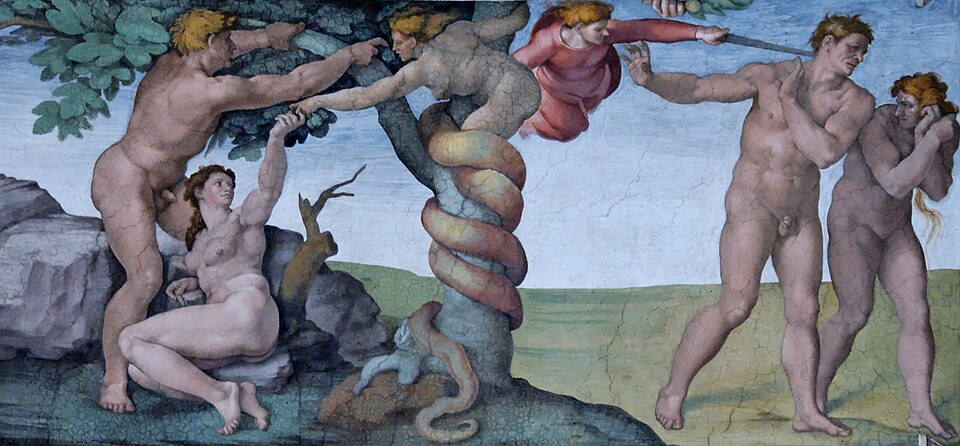
Judas, famously known for his betrayal of Jesus, is almost always depicted as a redhead. In France, which had a low opinion of gingers back in the 19th century, they would insultingly say, “poil de Judas” which could be translated to ‘hair of Judas’
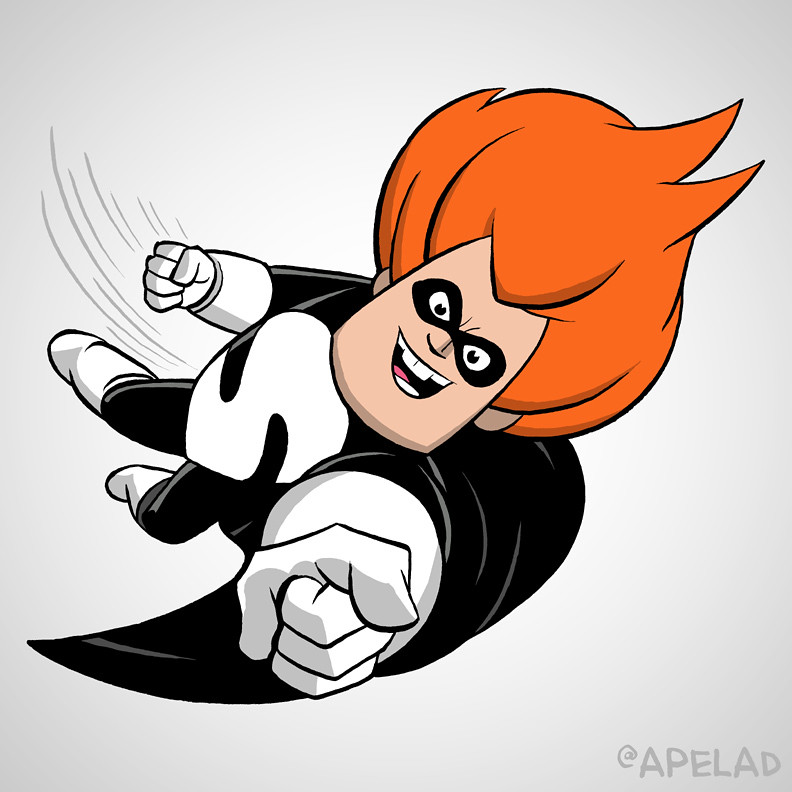
When you really think about it, a lot of your favorite movie villains have those signature crimson locks. Syndrome from The Incredibles, Hans from Frozen, Anastasia the evil stepsister from Cinderella, Chuckie, Poison Ivy, and Pennywise just to name a few. Even bullies in middle school and high school-based movies are often portrayed by redheads due to the association of red hair to a bad temperament.

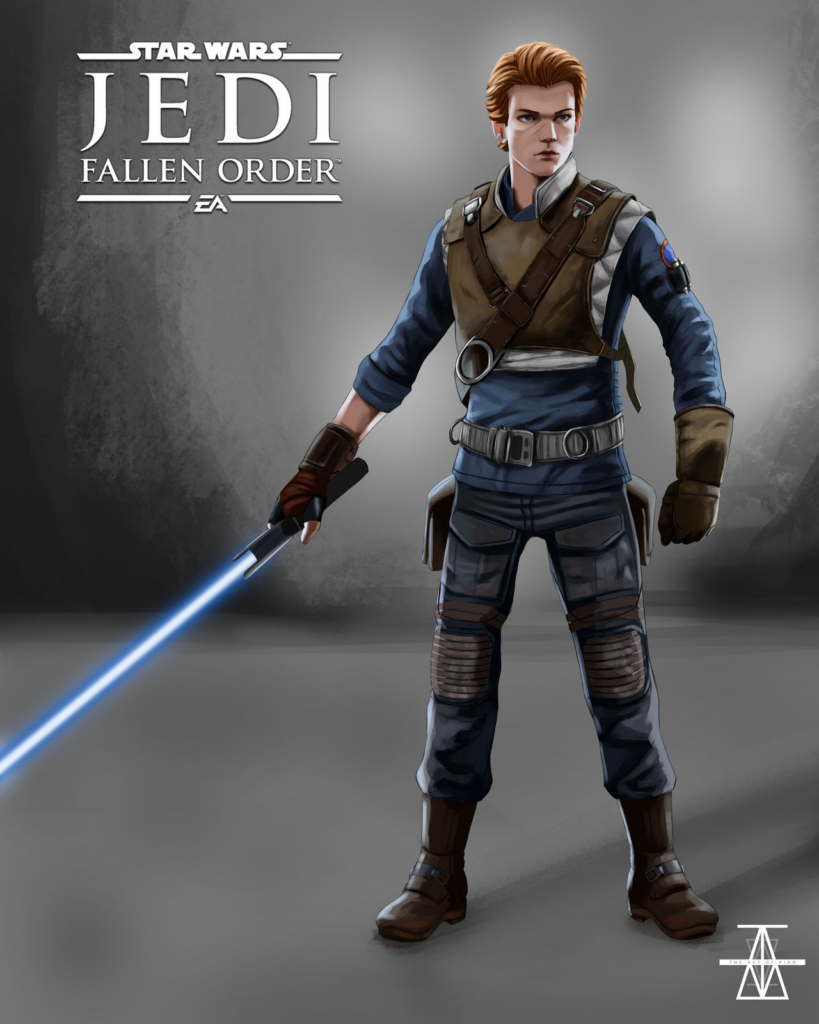
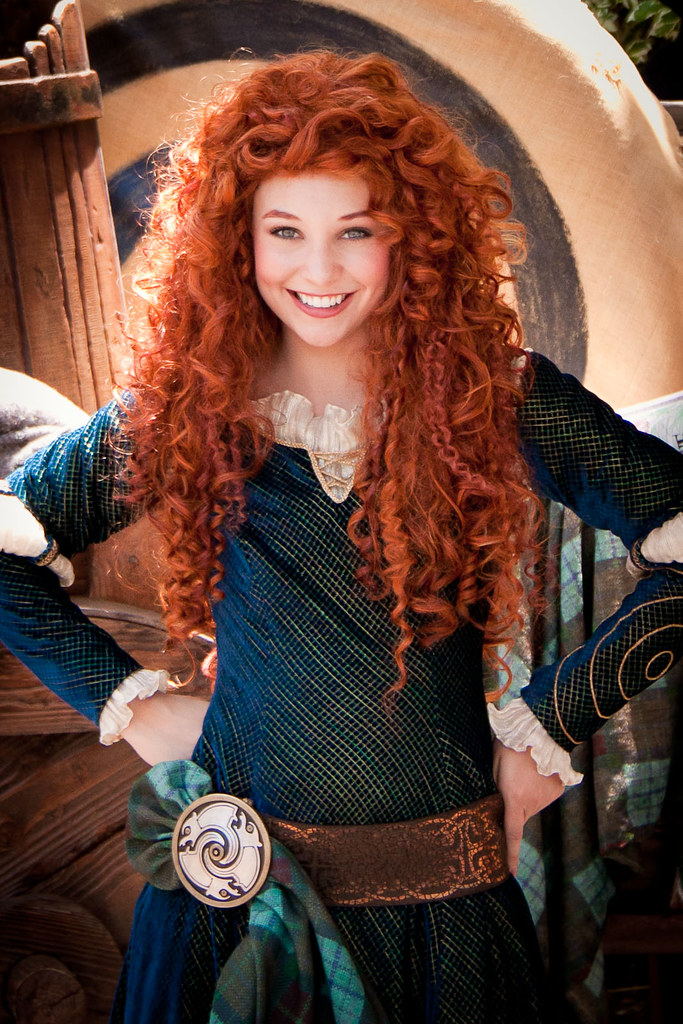
Only in the last decade have we seen positive, non-clumsy, or non-sexualized characters emerge. Characters like Cal Kestis from Star Wars Jedi: Fallen Order, Fiona from Shrek, Merida from Brave, and Anna from Frozen are finally giving us a new script. For those of us born this way, it feels like we are finally moving away from a world where we are just “drawn that way” and toward a world that respects our true biology.
Closing: Brilliance in the Odd and Strange
St. Patrick’s Day will come and go (but my “Hair-itage” remains). I have moved from a child who tried to conform in Catholic school to an adult who embraces being a “mutant.” Both the bullying and the modern “lucky” comments miss the point. Being a redhead is a complex biological journey that requires constant advocacy and meticulous systems.
So the next time you see a redhead, remember what I have said. Our hair color is not the only thing that makes us unique. We are strong individuals with many interesting quirks, but we are also just humans like anyone else. Brilliance is born out of the odd and the strange. I have finally learned to love being “crazy” about my systems.